Transparency
Tested honestly, linked openly.
Every dog in our program runs the full Embark genetic panel before any breeding decision. OFA evaluations are something we add on the dogs we're building lines around. The results below are the same ones we'd hand a vet, including the link to verify them.
What we test for
Miniature dachshunds carry a small handful of breed-relevant genetic risks, and a few of them matter more than the rest. The one most people have heard of is IVDD (intervertebral disc disease, the long-back problem the breed is known for). CDDY is the variant tied to disc risk; CDPA is the one that gives the breed its short legs. Alongside that there's a cluster of vision and neurological conditions that show up rarely, but that are devastating when two carriers happen to be paired without testing: PRA (progressive retinal atrophy, cord1 variant), NCL (neuronal ceroid lipofuscinosis), and DM (degenerative myelopathy). Every dog in our program is run through the full Embark Breeder panel (250+ markers) before they're ever considered for breeding, so we know where each one sits long before any pairing comes up.
OFA evaluations on our primary lines
On top of genetic testing, we add Orthopedic Foundation for Animals (OFA) evaluations per the Dachshund Club of America's CHIC requirements: an ACVO ophthalmologist eye exam and a patellar luxation evaluation, plus the cardiac exam, which CHIC lists as optional. Those requirements are published in full on OFA's Dachshund breed page. The Dachshund Club of America publishes its own parent club health statement for the breed as a scanned PDF. We do this work on the dogs we're building our lines around, primarily our titled dogs and the foundation dogs we're keeping back to shape the next generation. Most OFA evaluations can only be filed once a dog is twelve months old, so the picture continues to fill in as our younger dogs come of age.
OFA testing is most relevant to other breeders and to the show world, and not typically on a pet family's radar. Not every dog in our program needs OFA, and we don't pretend otherwise. We invest in it where it'll meaningfully shape the lines we're building, and we grow that side of the program over time. Results are filed with OFA and assigned a public CHIC number anyone can look up at ofa.org.
Reading the results
We link to the labs rather than republishing their findings here, so what you read is the record itself, in the lab's own wording, not our summary of it. Embark and OFA both explain their own result categories better than we could.
One marker is worth its own note: IVDD (CDDY). Nearly every Dachshund carries this variant, because it's part of what gives the breed its short legs and long back. An At-Risk CDDY result isn't a red flag on its own; it's breed-typical. We track it and manage it in each dog's daily life through weight control, controlled exercise, and a harness instead of a collar, rather than treating it as a pairing decision.
The records
Every dog, straight from the lab.
Each link opens that dog's record at the lab that produced it. OFA exams are added on our primary-line dogs, so not every dog has one.
What the table looks like from the couch
The results above are the paperwork. Here's what families actually notice once the puppy is home, in their own words.
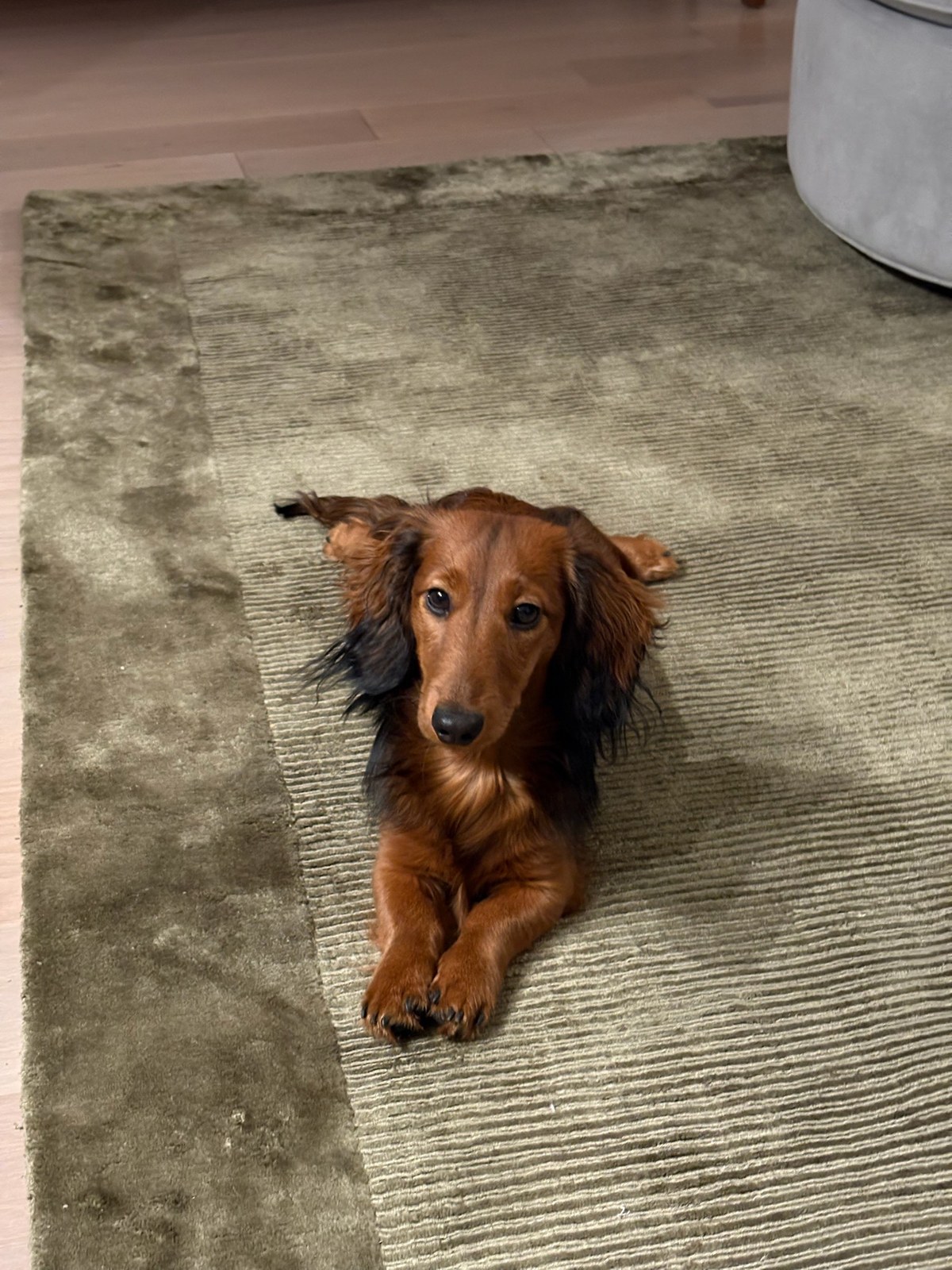
“He has been the most incredible pup we could've asked for. We are stopped constantly in the street by people asking who the breeder is, and his vet said he's one of the healthiest dachshunds he's ever seen. He is FULL of personality. He absolutely adores children and loves to play with other pups more than anything. Huge cuddler and total mama's boy.”
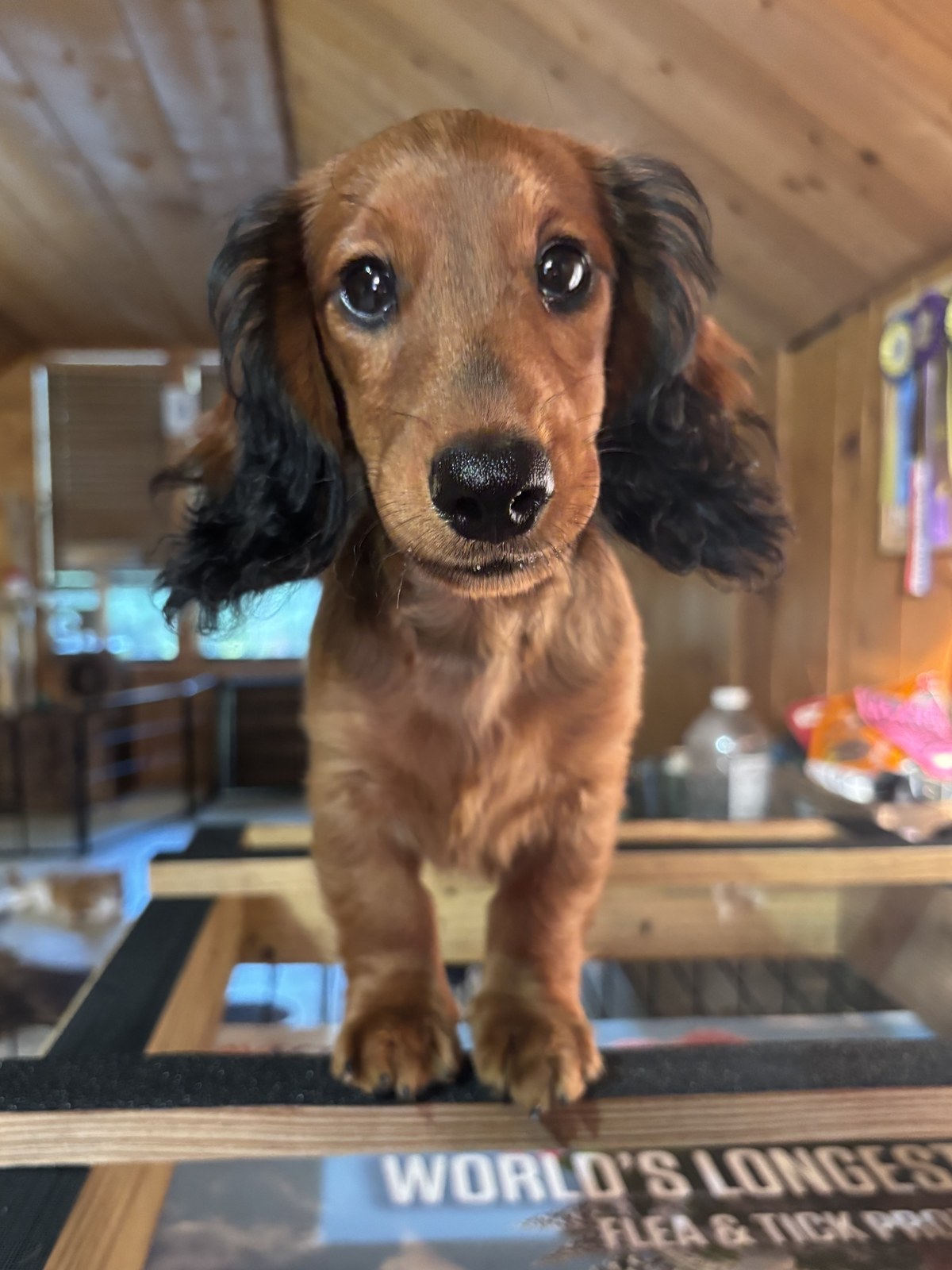
“He has been such a pleasure so far. He earned his Home Manners title at 14 weeks and has been potty trained since about that time as well. Thank you so much for him!”
Want to see a certificate we haven't linked?
We're happy to share the original Embark report or OFA filing for any dog on this page. Just send us a note and we'll pull it together.